
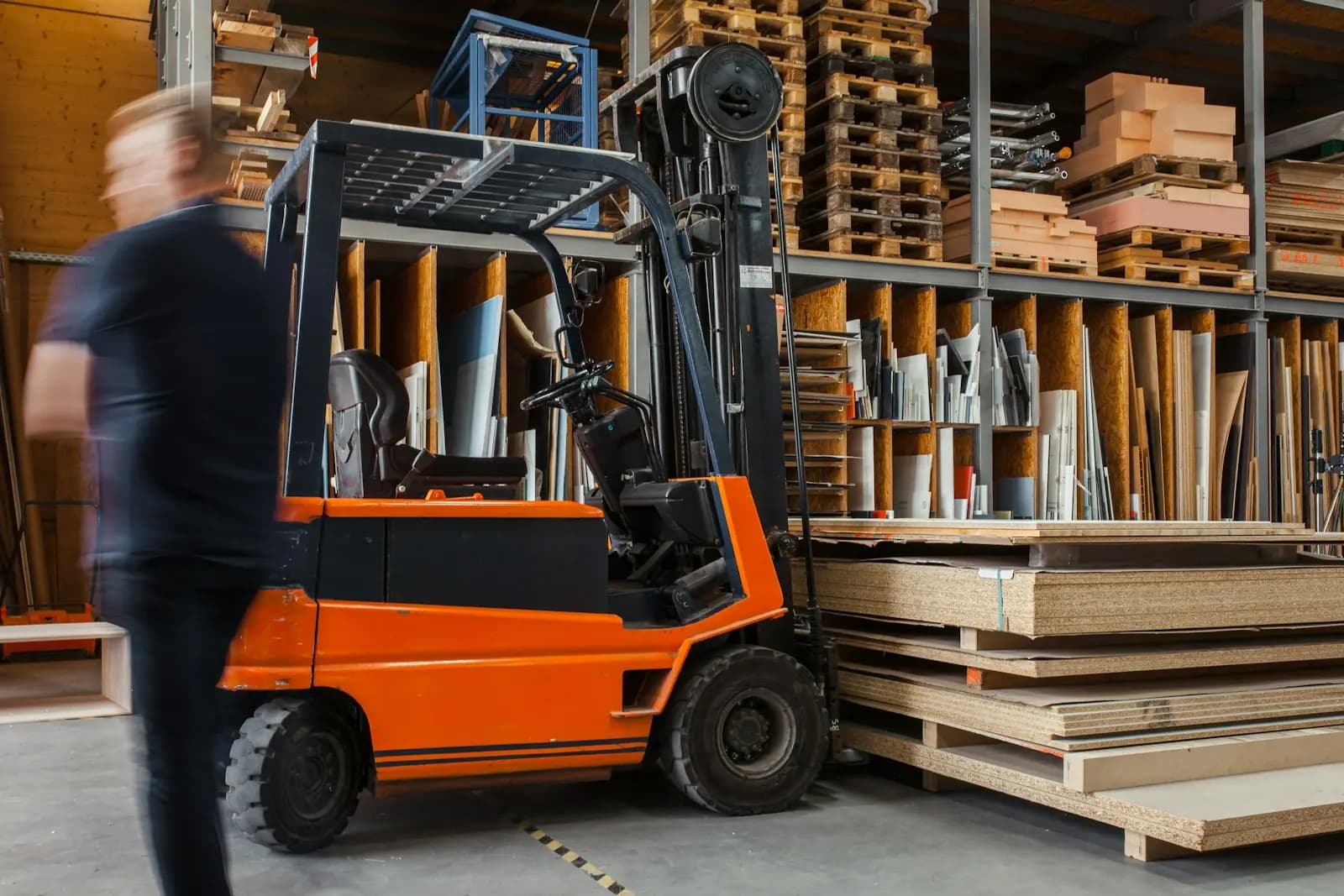
Many business owners want to change how they sell what they have. An equipment shop wonders whether to rent by the day instead of selling outright. A machine maker wants customers to pay per item produced instead of paying in full up front. A vehicle or equipment seller wants to offer instalments. Smaller operators worry that if they rent something out it will be damaged, or if they sell on instalments the customer will disappear.
These four models, outright sale, rental, hire-purchase and pay-per-use, differ in who owns the asset at each stage, who bears the risk and when the money comes in. The contract and the tax treatment differ accordingly.
The core answer
If you want customers to start easily and you want recurring revenue, renting or pay-per-use fits, but the provider must invest in holding the asset, maintain it and bear the asset's risk. Outright sale brings money in quickly and transfers the risk, but the seller is legally liable when the goods are defective. Hire-purchase is a special type of contract for which the law sets the form and the effect of default, so the contract must be written correctly before delivery.
The rule (Thai law). Section 453 of the Civil and Commercial Code covers a sale, where ownership passes to the buyer. Section 537 covers a lease, where the lessor lets the lessee use or take the benefit of property for a period in return for rent. Section 538 covers a lease of immovable property for more than three years, which must be in writing and registered, failing which it can be enforced in court for only three years. Section 572 covers hire-purchase, which must be in writing or it is void, and sections 573 and 574 cover termination of hire-purchase by the hirer and the effect of default.
Our practical view. Choose the model by asking three questions: who should hold the asset and the capital, who is better at maintaining it, and how the customer wants to pay. Do not choose it just because you see competitors doing it. Then write a contract that fits that model. Do not use a sale contract for a rental business, because the legal effects are very different.
1. How the four models differ in substance
| Issue | Outright sale | Rental | Hire-purchase | Pay-per-use |
|---|---|---|---|---|
| Ownership | Transfers to the buyer | Stays with the lessor | Stays with the owner until the hirer has paid in full and ownership is agreed to pass | Stays with the provider |
| User | Buyer | Lessee | Hirer | Customer uses; provider holds the machine |
| Money received | In one payment or in instalments as agreed | Rent in periodic payments | Hire-purchase payments in periodic instalments | By volume or time of use |
| Risk to the asset | Passes to the buyer after transfer | Lessor bears normal wear; lessee bears damage from misuse | Hirer bears high risk under the contract | Provider bears most of the risk |
| Repair and maintenance | Buyer, except under warranty | Lessor repairs defects not caused by the lessee | Hirer, as the contract provides | Mainly the provider |
| Form of contract required by law | Not required, except for certain kinds of property | Not required, except immovable property over three years | Must be in writing | No specific provision; follow what is agreed |
This table is only an overview. The real details depend on the contract terms and the type of asset.
2. Outright sale: quick money, but liability after the sale
An outright sale transfers ownership once the buyer has agreed to buy (section 453). The seller gets the money and does not have to hold the asset, but remains liable for defects and may be liable for damage from unsafe goods. See selling products only, or products with after-sales service.
When you sell on instalments and transfer ownership immediately, the seller becomes an ordinary creditor. If the customer does not pay, the seller cannot repossess the goods on its own and must rely on court action. If you want ownership to stay with the seller until full payment, you need a different type of contract, such as hire-purchase, or a sale contract in which the seller reserves ownership to the extent the law allows, which a lawyer should review before you use it.
3. Rental: the lessor holds the asset, the lessee gets to use it
A lease under section 537 is the giving of use of property for a period in return for rent. The lessor earns repeat income and gets the asset back, but bears the asset's risk.
What a lease should state
- Description of the asset. Model, serial number, condition on delivery date, with photos or an acceptance checklist.
- Lease term. Start date, end date, renewal and any right to terminate early.
- Rent and payment. Payment dates, the effect of late payment, the deposit and the conditions for returning it.
- Use of the asset. For what purpose, where it is located, a ban on letting others use it or subletting, and a ban on modification.
- Maintenance. Who cleans, who carries out scheduled checks, who pays for consumable parts, and who repairs damage from misuse.
- Damage and loss. Liability if the asset is lost, damaged or stolen, who must take out insurance and who the beneficiary is.
- Return of the asset. How it is inspected, the standard for normal wear, and the penalty for late return.
- Tracking the asset. The right to enter to inspect or to retrieve it if the lessee breaches the contract.
Leases longer than three years. Under section 538, a lease of immovable property for more than three years must be in writing and registered with the competent official, or it can be enforced in court for only three years. If your business leases out space or premises, such as a factory or building, take note. See leasing a ready-built factory and renting a house, dormitory or shop: tenant and landlord rights. For movable property such as tools and equipment there is no such registration rule, but you should still put it in writing.
4. Hire-purchase: pay by instalments, then own
Hire-purchase under section 572 is where the owner lets property and promises to sell it, or to let it become the hirer's, once the hirer has paid the amounts under the conditions. The owner therefore keeps ownership until full payment.
Key requirements
- It must be in writing. Section 572, paragraph 2 says a hire-purchase contract that is not in writing is void, and Supreme Court case law treats both parties' signatures as required. Delivering the asset before a signed contract is a risk.
- The hirer can terminate. Section 573 lets the hirer terminate by returning the property. A clause that always shuts off this right should be checked before use.
- The owner can terminate if the hirer defaults. Section 574 sets out the principles on termination when the hirer defaults on payment, and on forfeiting the amounts already paid. It has detailed conditions, so read the text of the section and check the case law.
- Penalty and forfeiture. A clause that forfeits amounts already paid may be reduced by the court under the penalty principles, as the Civil and Commercial Code allows.
Consumers and cars or motorcycles. Hire-purchase of cars and motorcycles to consumers is a business whose contracts are controlled under the Consumer Protection Act B.E. 2522, under which notifications of the Contract Committee set rules on contract terms and documents. Operators should check the latest notification of the Office of the Consumer Protection Board before using a contract form, because a term that conflicts with the notification may have no effect and, in practice, administrative liability can arise. A hirer who cannot keep up the payments has several rights. See can't keep up car or home payments: what happens if it is repossessed.
A business that sells other kinds of assets on hire-purchase, such as machinery to a business customer, is outside the consumer contract notifications but must still comply with section 572, and a business customer can still raise unfair contract terms if the contract is a standard form.
5. Pay-per-use: selling the result, not the machine
In a model where the customer pays by volume of use, such as by pages printed, machine hours or number of uses, the provider typically installs the machine at the customer's site, keeps ownership, maintains and repairs it, and charges by use. There is no specific statute, so the legal effects come from the contract, which may mix lease, service and the sale of consumables.
Points to write more clearly than for the other models
- How use is measured. Who measures, with what tool, whether the customer can verify, and how to charge when the meter fails.
- Minimum charge. Whether there is one; it protects the cost of the provider's investment.
- Commitment period. The provider invests in the machine, so there is often a minimum term and a consequence for ending early.
- Ownership and access. When the provider may enter to maintain the machine or take it back.
- Risk to the machine. Who insures against fire, flood and theft.
- Data the machine stores. If the machine stores personal data or the customer's business data, the provider may be a processor or controller under the PDPA. See the PDPA compliance checklist for businesses.
- Service levels. Response and fix times. See MSA and SLA.
A caution: drafting this as a purely service contract does not take you outside the principles of a lease if, in reality, the customer possesses and uses the asset itself. The court looks at the substance of the contract, not its name.
6. Who bears the risk to the asset, and who repairs
A common mistake is failing to agree on risk. Build a table of events and who bears the burden.
| Event | Lessor / provider | Lessee / customer |
|---|---|---|
| Wear from normal use | Repairs or replaces | Not liable |
| Damage from misuse | Repairs, then charges | Responsible for repair costs |
| Asset lost or stolen | As insurance and contract provide | Liable as the contract provides, if any |
| Breakdown from an existing defect | Responsible | Reports immediately |
| Natural disaster | As insurance and contract provide | As the contract provides |
For force majeure, agree in advance what happens to rent or service charges when the asset cannot be used; do not rely on interpretation after the event. Have both parties inspect the asset's condition and photograph it every time it is delivered and returned.
7. Tax and accounting: what to ask your accountant before changing model
When you change from outright sale to rental, revenue that used to arrive in one payment is spread over periods, while the cost of the asset is paid up front. Cash flow will be tight at first, so plan working capital before you change. See profitable but short of cash.
Points to ask your accountant or tax adviser
- Value added tax on rental and service charges, which has a different timing of liability from selling goods and may differ by type of asset. Check with the Revenue Department.
- Depreciation of the leased assets.
- Withholding tax on rent, which a corporate lessee may have to withhold when paying rent as the law requires.
- Revenue recognition for hire-purchase, which is structured differently from ordinary rent.
- Taxes and fees on registering a lease, if it is immovable property.
This guide does not give tax rates, because rates and conditions change. Check with the Revenue Department or your accountant first.
8. Effects on the company's objects, licences and stock
- The company's objects. A company moving into leasing should check whether its registered objects include leasing. If they do not, there is a procedure to amend them as the law requires. See after registration: changing directors, capital, address or objects.
- Licences and product standards. Some goods have conditions on sale or on making them available for others to use. Check the specific rules for the goods.
- Stock versus assets. A machine that used to be inventory becomes a fixed asset when it is put out for rent. Your accountant should set the accounting and tax treatment.
- Foreign shareholders. Some kinds of leasing may fall within businesses that are restricted for companies with a foreign majority. Check with an adviser.
9. Hybrid options and changing model along the way
Many businesses combine models, for example selling the machine and renting the accessories, or renting first and then giving a purchase option at the end. Points to watch
- Rental with a purchase option. This may be hire-purchase and must comply with section 572 if the terms make the lessee the owner once it has paid in full.
- Converting from rental to purchase. Set how the purchase value is calculated and the effect on rent already paid.
- Converting existing customers from sale to rental. It must not affect the original sale contract or any warranty that has not yet expired.
Before changing the model of the whole business, try it with a small group of customers first. See piloting a business model change.
10. Checklist before choosing a model
- You can say who should hold the asset and carry the capital burden
- You have assessed your ability to maintain, supply spare parts and track the asset
- You have chosen a contract type that matches reality (sale, lease, hire-purchase or pay-per-use service)
- For hire-purchase, the contract is in writing and signed before delivery
- For leases of immovable property over three years, you register under section 538
- The contract states who bears the risk, who insures and who maintains
- You have set how use is measured and how disputed readings are handled (if pay-per-use)
- You have checked the consumer contract notifications if the customer is a consumer and the asset is a car or motorcycle
- Your accountant has reviewed VAT, withholding tax and depreciation
- You have checked the company's objects and any related licences
- You have tried it with a small group of customers first
Further reading
- Selling products only, or products with after-sales service — liability after sale and warranties
- SaaS pricing models and subscription contracts — when pay-per-use is software
- MSA and SLA for monthly service contracts — service levels and maintenance
- Can't keep up car or home payments: what happens if it is repossessed — the hirer's point of view
- Leasing a ready-built factory — when the leased asset is immovable property
- Business models and their legal effects — an overview of choosing a model
Choose the model by who should hold the asset and bear the risk, then write a contract that fits that model, especially for hire-purchase, which must be in writing, and for leases of immovable property over three years, which must be registered.
We help draft and review lease agreements, hire-purchase agreements and pay-per-use service contracts to suit your assets and customers. For an initial consultation, call +66 92 254 2045 or send us the details. See also contracts and documents and monthly legal retainer.
This guide is published by Suwanvara Law Firm — a Khon Kaen law firm established in 1986. General information only, not legal advice on a specific matter.
