
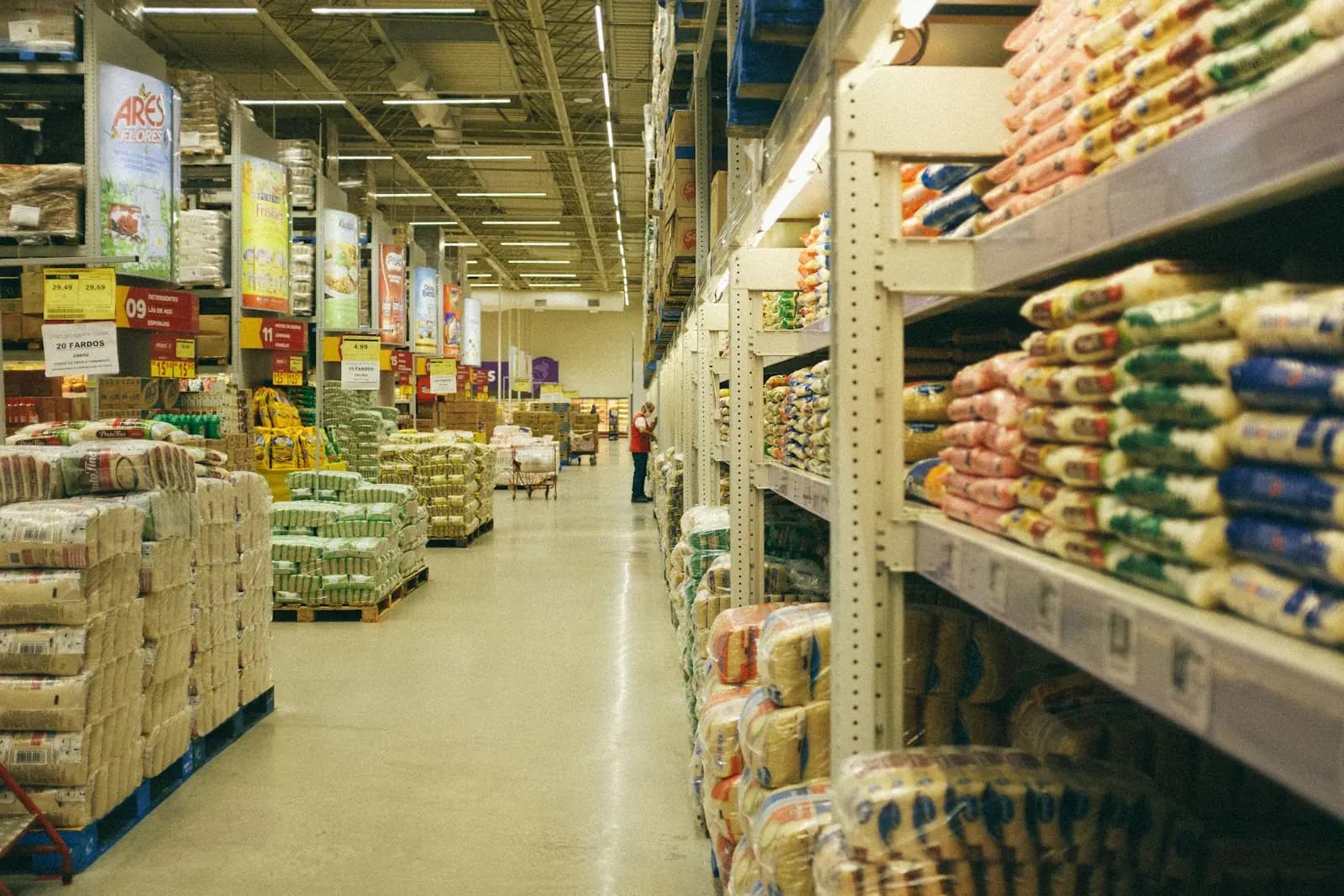
Many business owners start with a product or service they can make and only later think about who to sell to. Some sell well to friends and acquaintances through social media, then find that hotels or companies are asking for prices in volume. Others set out to win corporate customers from the start, but find that months after a quotation nobody has replied, and once they win the work the money arrives more slowly than expected. This is not good or bad luck. B2B (selling to businesses) and B2C (selling to consumers) are different games, in how the buyer decides, how the seller is paid, and the law that protects or binds the seller.
This guide follows on from choosing your first customer segment and assumes you have chosen whether to sell to companies or consumers, or are weighing it up. Choosing among types of business customer in more depth (government, large organisations, SMEs, foreign buyers) is in the guide to choosing B2B customer segments, and choosing online channels for B2C is in the guide comparing marketplaces with your own website. We do not repeat those topics here.
The core answer
B2B and B2C differ on four points: who decides to buy (one person or several, and whether the user and the payer are the same person), how long the sales cycle is, how and when you get paid, and what you must look after once the sale is made. When these four differ, the canvas blocks you have to rewrite completely are channels, customer relationships, revenue and costs. So you should not use one canvas for both types of customer without separating the columns.
The rule (Thai law). The two groups of customers are governed by significantly different laws. When you sell to consumers, the Consumer Protection Act B.E. 2522 regulates advertising (section 22), labels and businesses required to use a prescribed form of contract (section 35 bis). The Unfair Contract Terms Act B.E. 2540 (section 4) limits the effect of terms in a standard-form contract that give one side an unreasonable advantage. The Product Liability Act B.E. 2551 (section 5) sets the liability of operators, and consumer cases follow special procedure under the Consumer Case Procedure Act B.E. 2551. Sales to businesses fall under freedom of contract: the parties may agree anything that does not breach the law. A company buyer often has its own contract form and purchase order, and pays after withholding tax at source as the payer is obliged to. A government buyer is governed by the Public Procurement and Supplies Administration Act B.E. 2560. The seller's liability for defects in goods under sections 472 to 474 of the Civil and Commercial Code applies to both types of buyer.
Our practical view. Do not start from the question "which type is more profitable", because the answer depends on the product. Start from how long your working capital can wait, how many people you have for selling and paperwork, and what routes you already have to each type of buyer. A small business that sells to organisations with no reserve to wait for payment usually hits cash-flow problems before anything else. A business that sells to consumers with no system for complaints and returns usually hits reputation problems first. Selling to both groups at once is possible, but separate the terms, channels and documents from the start.
The example throughout this guide is hypothetical. Suppose a manufacturer of chilli paste and ready-made seasonings in Khon Kaen sells to consumers through LINE and a Facebook page, and a hotel asks whether it can buy for its restaurant. We will call this manufacturer "the chilli-paste shop" and return to the example from time to time.
1. B2B and B2C compared
| Point | B2B (selling to businesses) | B2C (selling to consumers) |
|---|---|---|
| Who decides to buy | Often several people, such as the user, department head, purchasing, accounting and the approver | Usually one person or a family member |
| User and payer | Different people (the user is not the payer) | Usually the same person |
| Sales cycle | Long: comparison, samples, internal approval | Short: can be decided in a single conversation |
| Size per sale | Large per customer, but few customers | Small per customer, but many customers |
| Channels | Salespeople, referrals, trade shows, direct quotations | Social media, marketplaces, a shop front, a website |
| Price and discounts | Negotiable; volume and contract pricing | Usually one list price; promotional discounts |
| Payment | Usually on credit, paid after delivery or on the buyer's payment cycle | Usually paid before or on receipt of the goods |
| Documents the buyer needs | Quotation, purchase order, delivery note, invoice, tax invoice, vendor registration | A receipt or a payment slip is enough; a tax invoice only if requested and the seller is VAT-registered |
| After sale | Acceptance, service contract, account management, contractual warranty | Fast chat replies, returns and exchanges, complaints that may become public |
| Marketing | Build credibility, samples of work, case studies | Build awareness, reviews, promotions |
| Main legal differences | Freedom of contract, the buyer's contract, withholding tax | Consumer protection law, unfair contract terms, product liability |
This table is an overview, and not every business fits it. Many retailers do not have several buyers, and some B2B businesses, such as a small monthly service business, have a very short sales cycle.
2. Who decides to buy, and what it means for how you sell
When selling to a company, the person who likes your product is often not the person who signs the approval. Ask from the first conversation who the actual user is, who evaluates, who purchases and who approves the budget, and draw a map of these people in your sales proposal, because each wants something different. The user looks at quality, purchasing looks at terms and the seller's risk, accounting looks at documents and payment date, and management looks at value.
In the example of the chilli-paste shop, the hotel's chef tastes the product and likes it, but it is the purchasing department that asks for the vendor registration documents, a certificate for the production site and a sample label. A manufacturer that has these documents ready gets through this stage faster.
When selling to consumers, the decision maker is usually one person, but think about what makes them trust you: reviews, real photos, fast replies in chat and taking returns when something is wrong. The law becomes relevant when advertising misleads consumers or a label is incomplete, which the seller must watch from the very first post.
3. Sales cycle, time and working capital
The B2B sales cycle is long because of comparison and approval. A small seller needs to plan how to stay afloat while waiting, rather than waiting and losing other opportunities. Practical suggestions:
- Keep the consumer or small-customer sales flowing while you wait for the corporate customer's decision, if the business can do so.
- Set your own internal decision point on how many times to follow up, and if there is no progress, park the matter.
- Offer samples or a trial period with a clear scope instead of unlimited free goods, and record in writing that it is a trial and not a guarantee of further purchases.
- Once you receive a purchase order, do not start production until you have checked that it matches the quotation you gave.
B2C has a short cycle, but the volume has to be large enough, and the cost of winning customers is often high per sale. Working out the cost of each sale is covered in the guide on how much is left from each sale.
4. Getting paid: credit, withholding tax and tax invoices
This is the part small sellers underestimate most.
Corporate customers often do not pay immediately. Payment on the buyer's own cycle, such as within a set period after receiving the invoice or on a monthly run, is normal, and is sometimes tied to acceptance or to receiving correct and complete documents. If the documents are wrong, the payment date slips further. A seller should therefore agree in the contract or purchase order from when the payment period runs, how many days are allowed for acceptance, and whether silence counts as acceptance. How to check these terms is in the guide to checking a contract a large customer sends to an SME, and when a customer does not pay on time see the guide to unpaid invoices from business customers.
Withholding tax. A buyer that is a juristic person often has a duty to withhold tax from the money it pays the seller for certain types of payment, such as service fees, and remit it to the Revenue Department on the seller's behalf. The seller receives less money by the amount withheld, but receives a withholding tax certificate to use as a tax credit when filing the annual return. This is a matter of cash timing more than lost income. What to do: ask your accountant whether, and how, your sales are subject to withholding, and keep every certificate. For rates and conditions, check with the Revenue Department; do not rely on what others tell you, as they can change.
Tax invoices. An operator registered for value added tax must prepare a tax invoice and a copy every time it sells goods or provides services, and hand the tax invoice to the buyer, under section 86 of the Revenue Code, with the required content set out in section 86/4. A corporate customer that is VAT-registered often needs a correct tax invoice to claim input tax credit. If the seller issues it wrongly or late, the buyer will refuse to pay or ask for a correction, which directly affects collection. A person who is not registered has no duty to issue a tax invoice and should not issue a document stating that it is a tax invoice. Which businesses must register, and when, should be checked against the current threshold with the Revenue Department or an accountant.
Large buyers may ask you to register as a vendor (vendor registration), which usually means sending a copy of the company certificate, a bank book, tax documents and sometimes standards certificates. Keep these documents in a single folder from before your first sale.
Consumers pay differently. They usually pay before or on receipt of the goods. The seller's risk is therefore refunds and payment disputes rather than debt collection. But if you take a deposit or advance payment, understand that a deposit (มัดจำ) under sections 377 and 378 of the Civil and Commercial Code has different effects from an ordinary advance payment. This is covered further in the checklist before taking your first customer.
5. After the sale: warranty, complaints and ongoing service
B2B and B2C differ in how problems reach you.
Corporate customers usually report problems in writing through purchasing or the user, and the contract usually sets a cure period, penalties and a cap on liability. A seller should ask that both the acceptance period and the warranty period be fixed to a definite length of time, not left open-ended.
Consumers usually report through chat, by phone or in public posts, and may complain to the agency that looks after consumers. A seller should have a channel that replies quickly, a returns and exchanges policy written before selling, and a record of every complaint.
Legally, the seller is liable for defects in the property sold under section 472 of the Civil and Commercial Code, where the defect existed before or at delivery and reduces the value of the property or its fitness for normal use or the use agreed in the contract. Section 473 deals with cases where the seller is not liable, for example where the buyer already knew, or should have known with ordinary care. Section 474 sets the limitation period for suing, and agreements excluding liability are in sections 483 and 485. A seller should check the text in the current version of the Code when drafting warranty terms. The key point is that how far an exclusion of liability is effective depends on the facts, and in a standard-form contract with a consumer, an exclusion that gives the seller an unreasonable advantage may be limited under section 4 of the Unfair Contract Terms Act B.E. 2540.
6. The law when selling to consumers (B2C)
The laws a consumer seller should know:
The Consumer Protection Act B.E. 2522 has rules on advertising (section 22), which prohibits statements that are unfair to consumers or that may harm society as a whole, on product labels, and on businesses designated as contract-controlled businesses (section 35 bis), which must use a form of contract prescribed by the committee. Check the latest announcements of the OCPB to see which types of business have been designated. Before selling goods that must carry a label, see the guide to product labelling.
The Unfair Contract Terms Act B.E. 2540, section 4, provides that a term in a standard-form contract that gives the party setting the contract an unreasonable advantage over the other is enforceable only to the extent that it is fair and reasonable in the circumstances. Terms of sale written in advance for online sales, which the consumer clicks to accept, are usually standard-form contracts. A seller should therefore not write an overly broad exclusion of liability and expect it to be enforced.
The Product Liability Act B.E. 2551, section 5, makes an operator liable to anyone who suffers damage from unsafe goods, whether or not the injured person is the buyer, and without the need to prove that the operator acted intentionally or negligently. As a result, manufacturers and importers should have a quality-check system, keep production lot records and consider product liability insurance if the goods carry a health risk.
Direct sales and direct marketing. The Direct Sales and Direct Marketing Act B.E. 2545 applies to some forms of sale, such as direct sales through agents, and direct marketing that sells through media where the consumer orders without seeing the real goods, such as online. These may carry a duty to register and, in some cases, give consumers a right to cancel the contract within the period set by law. Whether your business falls within it depends on the facts, so check with the OCPB before you start selling.
Consumer case procedure. The Consumer Case Procedure Act B.E. 2551 is a procedural law that makes it easier for consumers to bring cases. A seller should not assume that a small consumer is unlikely to sue.
Personal data when you have many customers. Collecting the names, phone numbers, addresses and purchase histories of many consumers falls under the Personal Data Protection Act B.E. 2562. You need a privacy notice, a suitable lawful basis, and consent when sending direct marketing. See the PDPA checklist.
7. The law when selling to businesses (B2B)
Freedom of contract and the buyer's contract. Parties that are businesses can agree on almost anything, and courts generally enforce what was signed. Large buyers often have their own form of contract and general terms of purchase, and a seller who signs without reading is bound by them. For the terms to check, see the guide mentioned above.
Credit and collection risk. A seller should check the buyer's creditworthiness before granting credit, for example by looking up the juristic person's details at the Department of Business Development, asking for registration documents, and setting an acceptable credit limit in steps rather than giving the full amount from the first order. A seller should not deliver the whole job before receiving the first instalment if the customer is one you have not worked with before.
Electronic tax invoices and documents in the form the buyer asks for. Some buyers ask for tax invoices and invoices in a specific format, or ask you to submit them through their system. These arrangements should be written into the contract or purchase order, and you should ask your accountant whether your system can do this. Electronic documents and signatures are valid under the law on electronic transactions. See the guide to electronic signatures in company contracts.
Government customers. Government agencies buy under the rules of the Public Procurement and Supplies Administration Act B.E. 2560 and related regulations. You must register in the government procurement system and follow the prescribed bidding method, which is very different from selling to a private company. Details are in the guide to choosing B2B customer segments and at the government procurement system.
Made-to-order work versus sale of goods. If the buyer orders you to produce or do work to a specific design, the contract may be a contract for work (จ้างทำของ) rather than a sale, with different rules on acceptance of the work and liability. Write the contract to make clear whether it is a sale of standard goods or made to order.
8. Businesses that sell to both groups (hybrid), and B2B2C
Many businesses start with B2C and then pick up B2B, or sell through an intermediary to the end consumer (B2B2C). These situations have common traps.
| Trap | Consequence | Fix |
|---|---|---|
| Using the same prices and terms for both groups | Corporate customers ask for discounts and credit that retail pricing cannot support, and consumers who see wholesale prices are unhappy | Separate price lists, terms of sale and ordering channels |
| Using B2B-style contracts with consumers | Exclusions of liability may be limited in effect, and consumers can complain easily | Prepare separate terms of sale for consumers |
| Producing to full capacity on B2B orders and having no stock for retail customers | Losing the more stable customer group | Set a split of production capacity and rules on priority |
| A manufacturer sells through an intermediary but does not say who handles complaints | End consumers do not know whom to contact, and the manufacturer is liable under the unsafe-goods law even though it did not sell directly | Set out in the contract with the intermediary how complaints, product recalls and lot data are handled |
| Customer data gets mixed | Data collected for one purpose is used for other marketing, which breaches the purpose | Separate the databases and record the lawful basis for each group |
In the example of the chilli-paste shop, if the hotel orders so much that the manufacturer has to stop retail sales for a while, you should agree with the hotel a delivery schedule that can actually be met and write it into the purchase order, rather than accept every order and deliver late, and you should have the product labels complete as the law requires for both channels.
9. How B2B and B2C affect each canvas block
If you use the Business Model Canvas or the Lean Canvas, try writing two separate canvases, one for B2B and one for B2C, and compare which blocks differ most.
| Canvas block | If B2B | If B2C |
|---|---|---|
| Customer Segments | Type of business, position of the decision maker | Characteristics and situation of the consumer |
| Value Propositions | Lower cost, lower risk, time saved, continuity | Convenience, quality, preference, an affordable price |
| Channels | Sales team, referrals, trade shows | Social media, marketplaces, a shop front |
| Customer Relationships | Account manager, long-term contract | Chat, membership, loyalty programme |
| Revenue Streams | Quotations, instalment contracts, repeat orders | One-off sales, subscriptions, repeat purchases |
| Key Activities | Meeting customer requirements, chasing documents | Advertising, looking after the customer community, delivery |
| Cost Structure | Sales team, credit you have to wait on, debt-chasing costs | Advertising, platform fees, returns |
| Legal requirements | The buyer's contract, tax, vendor documents | Consumer law, labels, personal data |
Comparing them, you will see that the same business may need different teams, document systems and reserves depending on the customer type. The choice is therefore about your own readiness, not about which is better.
10. Checklist before choosing, or expanding to the other group
- Can write down who decides to buy, who uses, who pays and who approves
- Have assessed how long working capital can wait for a corporate customer to pay
- Have asked the accountant whether our sales are subject to withholding tax and whether a tax invoice is required
- Have a vendor document pack ready for corporate customers (company certificate, bank book, tax documents)
- Have separate terms of sale for corporate customers and consumers
- Have checked that advertising and labels are not misleading
- Have checked whether the business is a contract-controlled business, or falls under direct sales or direct marketing
- Have set a warranty policy, a returns and exchanges policy and a channel for complaints
- Have a privacy notice and a way to obtain marketing consent from consumer customers
- Have checked the buyer's creditworthiness before granting credit for the first time
- If selling through an intermediary, have an agreement on complaints, product recalls and customer data
Further reading
- Choosing your first customer segment: the previous step, for those who have not yet chosen a customer group
- Choosing business (B2B) customer segments: compares government, large organisations, SMEs and foreign buyers
- Marketplace or your own website: choosing an online channel when selling to consumers
- Checking a contract a large customer sends to an SME: the terms to review before signing
- Unpaid invoices from business customers: when a corporate customer does not pay
- Product labelling: when selling goods to consumers
- First customer readiness checklist: the next step, preparing documents and systems before taking work
Selling to companies and selling to consumers are different games. Decide which one you will play first, then prepare the contracts, documents and working capital to match the rules of that group.
We help review terms of sale for each customer type, prepare contracts and documents for corporate customers, and plan tax and accounting to fit your sales model. For an initial consultation, call +66 92 254 2045 or send us the details. See also contracts and business documents and accounting and tax.
This guide is published by Suwanvara Law Firm — a Khon Kaen law firm established in 1986. General information only, not legal advice on a specific matter.
