
Hotel liability has two parts with different rules
Owners often lump every incident under “guest claims”, but legally there are two separate matters.
- A guest is injured or dies. The general rules of liability apply: the hotel is liable where there is negligence, whether its own, its staff's, or arising from a building or equipment that was poorly maintained.
- A guest's property is lost or damaged. There is a special rule for innkeepers, stricter than the general rule. The hotel is liable even without negligence, but there is a cap for valuables and there are time limits that the guest must meet.
Separate these two first, and your prevention systems, evidence gathering and insurance can be set up in the right places.
1. Guest injured: the hotel is liable where there is negligence
A hotel has a duty to keep the areas it controls reasonably safe for guests. The usual trouble spots are
- Swimming pools and slides: slippery surrounds, no depth signs, no child barrier, no lifesaving equipment.
- Stairs, balconies and railings: low or loose railings, uneven steps, poor lighting.
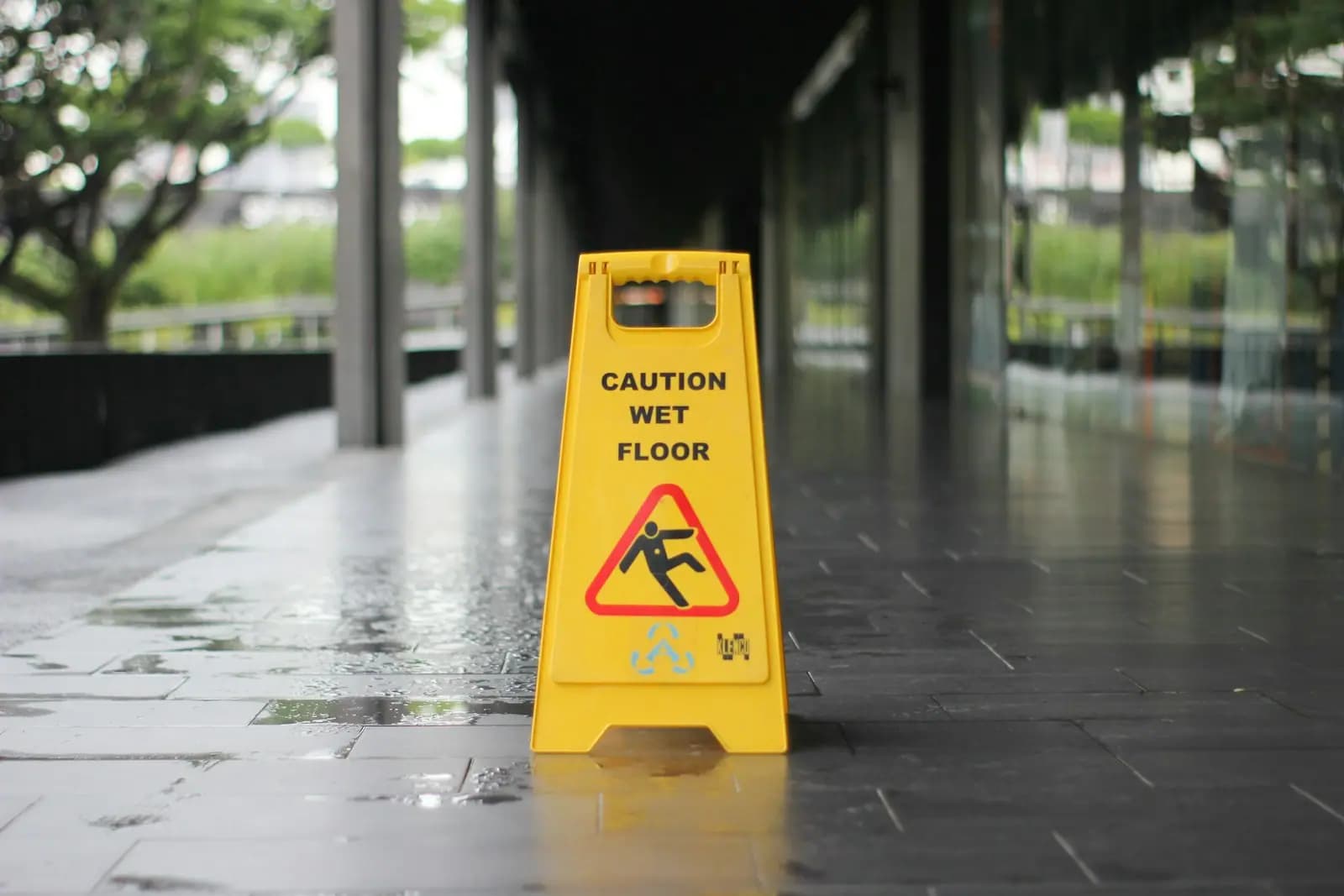
- Bathrooms and wet floors: especially open-plan bathrooms and polished stone floors.
- Glass doors: without stickers or bands to make them visible.
- Electrics, water heaters and fitness equipment: defective equipment that was not inspected on schedule.
Liability can arise in several ways
- The hotel's own negligence, for example knowing the floor is slippery but neither putting up a sign nor wiping it.
- Negligence of staff acting in the course of their employment. The hotel, as employer, is jointly liable.
- A defect in the building or inadequate maintenance. The possessor and the owner of the building are liable for the damage that results.
If the guest was partly at fault, for example climbing a balcony railing while drunk or jumping into the shallow end despite a prohibition sign, the court will consider how much of the damage each side caused. Damages may be reduced, or the hotel may not be liable at all.
A serious incident may also raise a criminal issue of causing serious injury or death to another by negligence, and the police may question the manager or the staff member responsible for that area.
2. How far warning signs and waivers help
Warning signs are evidence that the hotel told guests of the risk, and they help a great deal on whether the guest was at fault. But a sign is not a substitute for fixing the risk. If a balcony railing is loose, a sign saying “do not lean” does not release the hotel from liability.
Waivers and stay conditions have an important limit. An agreement or notice made in advance to exclude or limit liability for life, body or health arising from the intentional act or negligence of the hotel, or of people the hotel is responsible for, cannot be relied on under the law on unfair contract terms.
A waiver is still useful to
- Record that the guest understood the rules and the risks of an activity, such as kayaking, snorkelling or cycling.
- Confirm health information or limitations the guest disclosed.
- Serve as evidence when you argue that the guest broke the rules.
But do not expect a guest's signature to close off liability for the hotel's own negligence.
3. Guest property lost: the special rule for innkeepers
The civil law has a special chapter for innkeepers, hostels and similar places. The key points for operators are
- The hotel is liable even if the property is lost through other people, including people who come and go through the hotel. The guest does not need to prove negligence by the hotel.
- A cap of 5,000 baht for valuables, meaning cash and gold, banknotes, bills, bonds, share certificates, jewellery and other valuables. The hotel is liable for no more than 5,000 baht unless the guest deposited the items with the hotel and clearly declared their value (some older sources still say 500 baht, which is the figure before the amendment).
- Property that is not a valuable, such as bags, clothes and sports equipment, is not subject to this cap. The Supreme Court has held that a motorcycle is not a valuable, so the hotel may be liable for the full value of a motorcycle lost from the hotel's parking area.
- Exceptions: the hotel is not liable if the damage results from force majeure, from the nature of the property itself, or from the fault of the guest, the guest's companions or people the guest brought.
- The guest must notify immediately, for property not deposited with a declared value. If the guest discovers the loss and does not notify the hotel immediately, the hotel is released from liability, and the Supreme Court has held that telling the hotel manager counts as notice.
- A disclaimer sign is void. A notice put up to exclude or limit liability for a guest's property has no effect unless the guest expressly agreed.
- Six-month limitation. A claim for loss or damage must be brought within six months from the date the guest leaves the hotel.
What to do in response: offer a valuables deposit service at the front desk, with a deposit slip on which the guest lists the items and their value, put up a sign saying the service is available, and train front-desk staff to record any report of a loss immediately, with the time.
4. The first 24 hours after an incident
What you do on day one often decides the outcome of a dispute that runs for months afterwards.
- Look after the injured person first. Give first aid, call an ambulance, and note the time of each step.
- Photograph the scene before cleaning up: the floor, warning signs, lighting, railings and the equipment involved.
- Pull the CCTV footage and save it immediately. Most systems record over within days to weeks. Keep a reasonable period before and after the incident, not only the moment it happened.
- Prepare an incident record: who saw it, who helped, what the guest said, whether the guest was drunk, and who they were with. Have the staff involved write it themselves on the same day.
- Collect maintenance records: floor-cleaning schedules, pool inspection schedules, repair requests, electrical system certificates.
- Notify your insurer within the period the policy requires.
- Do not admit liability or promise payment in writing before talking to your insurer. Most liability policies prohibit the insured from admitting liability or agreeing to pay without consent. You can and should show sympathy and help the guest, but keep that separate from an admission of liability.
- Report to the police if the injury is serious, there is a death, or it is a theft case where the guest needs the police report to claim on their own insurance.
CCTV footage and guest information are personal data. Passing them to the other side's lawyer or insurer should be done through the proper channel and for a proper reason. See also Guest registration, TM.30, CCTV and PDPA for hotels
5. When a foreign guest's lawyer or insurer contacts you
Most foreign guests have travel insurance. The insurer pays for treatment first, then steps into the guest's rights (subrogation) to claim the money back from the hotel. The letter usually arrives in English several months after the incident, and claims costs at the guest's home-country rates, such as air evacuation, continuing treatment and loss of income.
What to do
- Do not ignore it on the assumption that the guest has gone home. A case can be brought in a Thai court, and the guest, as a service user, may sue as a consumer case, in which facts within the operator's own knowledge, such as how the pool or building was maintained, are for the hotel to prove.
- Pass it to your own insurer immediately and let the insurer or a lawyer reply.
- Ask for supporting documents, such as medical reports, receipts and the subrogation letter, before negotiating any figure.
- If you reach agreement, make a written compromise agreement stating that it is a single full and final payment, covering both the guest and the subrogated insurer, in language every party understands.
6. Public liability insurance
Public liability insurance is the main tool that stops one serious incident from becoming a burden the business cannot carry. When reading the policy, check
- The limit per incident and per year: is it enough for the treatment and medical evacuation costs of a foreign guest?
- Whether resident guests are covered, and whether the cover extends to every area guests use, including the pool, the gym and the beach in front of the hotel.
- Exclusions, such as water sports, serving alcohol and contractors' work.
- Cover for guests' property, which usually has to be bought separately from liability for injuries.
- Legal defence costs: whether they are inside the limit or separate.
- Whether the insured's name matches the operator. If the hotel is run by a company but the policy is in the landowner's name, there may be a problem when you claim.
If some activities are run by outside operators, such as a spa, tours or water sports, check that the operator has its own insurance and that the contract says who is liable when a guest is hurt. See also What to do when an insurance claim is denied
7. Villas and rental homes carry the same risks
Liability for negligence does not depend on size or licence. The owner of a few pool villas rented by the day faces the same risk of a guest drowning or falling from a balcony as a hotel does, and usually has no staff on site, so must rely even more on design and signage.
- A fence or gate around the pool for families with children
- Depth signs and pool rules in English and in the language of your main guest group
- Emergency numbers and the location of the nearest hospital in the room
- Insurance that covers commercial letting, not an ordinary home insurance policy
If the accommodation has not yet obtained a licence or made the notifications the law requires, an injury to a guest will bring that issue up as well. For the sequence of licences, read Which licences do you need to open a hotel or accommodation business
Checklist for accommodation owners
- Inspect the risk points every quarter, including the pool, balconies, stairs, bathrooms and glass doors, and keep inspection records.
- Keep a schedule for wet floors and the pool that staff actually sign.
- Make depth signs, pool rules and fire exits understandable to foreign guests.
- Set CCTV to keep footage long enough, and have someone who can pull and save footage immediately.
- Have an incident record form and an insurer-notification procedure that night-shift staff can use.
- Offer a valuables deposit service with a deposit slip stating the value, and put up a sign announcing it.
- Review the stay conditions and waiver so they contain no exclusions of liability that cannot be relied on.
- Check the limits, exclusions and insured name in the liability policy.
- Check the contracts and insurance of outside providers who run activities for guests.
Further reading
- Which licences do you need to open a hotel or accommodation business
- Buying or taking over an operating hotel or resort: what to check before you pay
- Guest registration, TM.30, CCTV and PDPA for hotels
- Service: Drafting and reviewing contracts, stay conditions and business documents
- Service: Legal retainer
