
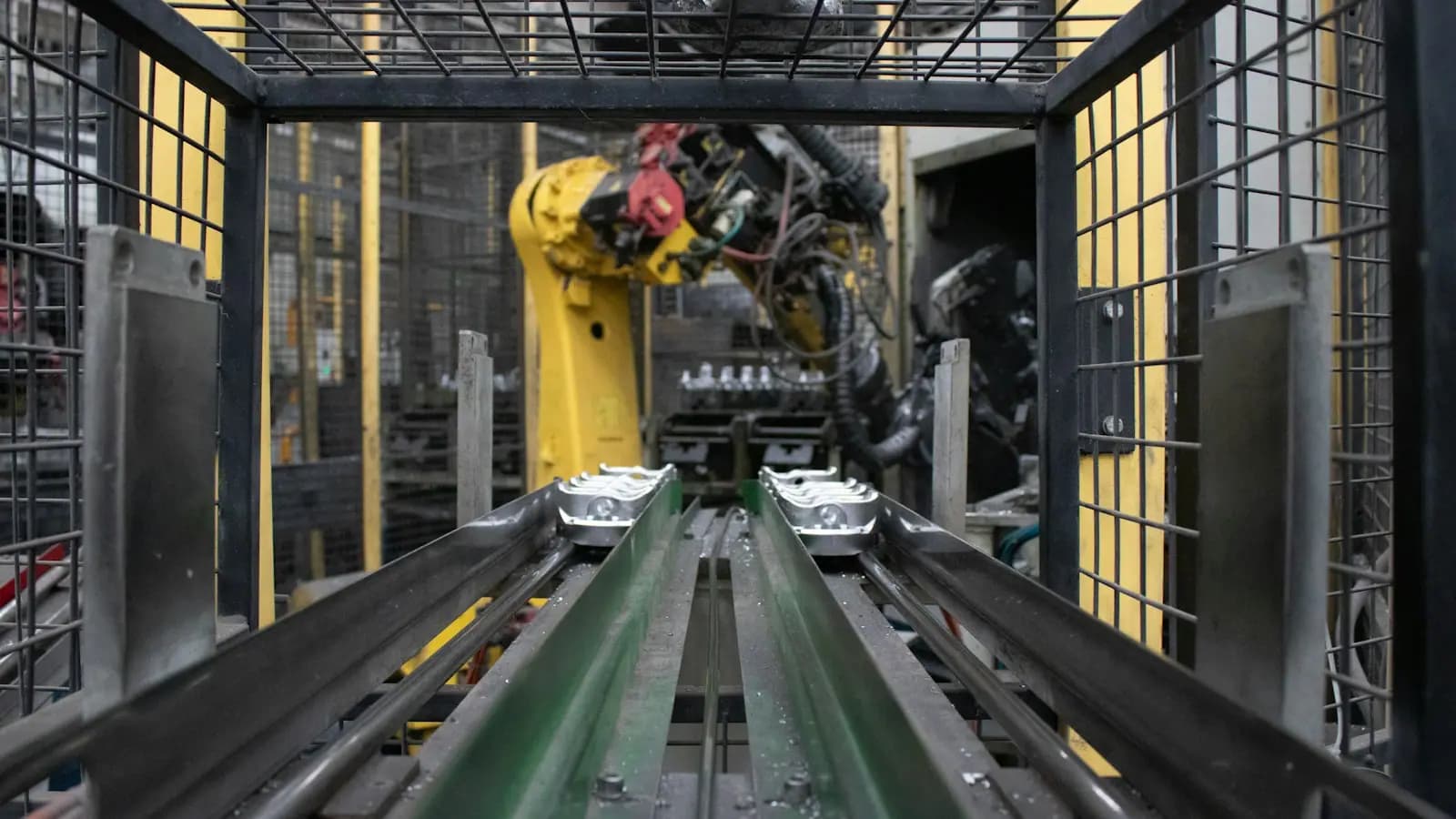
A factory buys a packaging machine whose quotation says 1,200 pieces per hour. After installation it runs at about 800, rejects are high and it stops on its own several times a day. The seller's technicians have adjusted it three times and then say the cause is the film the factory uses and operators who are not skilled enough, while the seller has already sent the invoice for the final instalment. The company wants to know whether it can require repair, ask for a refund or stop paying the remaining instalments.
This guide is written for the company that bought the machine, and it concentrates on what usually decides these disputes: the guaranteed figures, the test conditions and the technical evidence. It does not repeat the general contract-review checklist. If you have not ordered yet and want to settle the terms first, see importing machinery for a new factory. If you are the seller, see selling products with after-sales service.
The core answer
Do three things, in order. First, find out which figures the seller actually guaranteed and under what conditions they are measured. Second, prove the gap by testing under those conditions, recording the raw data jointly, and sending a defect notice with the figures. Third, choose a proportionate remedy: repair, withholding all or part of the remaining instalments, a price reduction, or rescission if the problem cannot be fixed within a reasonable time.
The law: Section 472 of the Civil and Commercial Code makes the seller liable where the property is defective to the point that its fitness for ordinary use, or for the use intended under the contract, is impaired, even if the seller did not know of the defect. Section 473 sets out exceptions, for example a defect that was obvious at delivery and that the buyer accepted without objection. Section 488 lets a buyer who finds a defect withhold the unpaid price unless the seller provides reasonable security. Section 474 bars a claim once one year has passed from the time the defect was discovered. Sections 483 and 485 allow liability to be excluded by agreement, but the exclusion does not protect the seller's own acts or facts the seller knew of and concealed. If the contract is to design, make and install to the buyer's requirements, it may be a contract of hire of work, to which Sections 598 to 601 apply, with different rules.
1. What figures does the seller guarantee, and under what conditions are they measured?
Most machinery disputes start with each side relying on a different set of figures. Before arguing anything else, lay the documents side by side and sort the figures into two types.
- Figures in a catalogue or brochure often say "up to" or "as high as" and are measured under conditions the manufacturer chose. They are not necessarily a guarantee.
- Guaranteed figures in the contract or the technical annex, such as throughput per hour, reject rate, dimensional tolerance, energy consumption or uptime (availability).
Then check the measurement conditions tied to each figure, because the seller often uses these as its defence.
| Condition | What to look for in the documents |
|---|---|
| Raw material | Type, specification, thickness, moisture or brand used in the test |
| Utilities | Voltage, air pressure, steam, cooling water |
| Environment | Temperature, humidity, dust |
| Product | The size or model of product used for measurement, since each runs at a different rate |
| Method of measurement | Test duration, warm-up period, how rejects are counted, measuring instruments |
| Operators | Who runs the machine during the test, and how many days of training the seller must give |
If the contract does not state a figure clearly, you may still rely on "the use intended under the contract" in Section 472, provided you can show the seller knew what product the company would make, from what material and in what volume. Helpful evidence includes emails or chats in which you sent the seller samples of the product and material before the quotation, and a quotation that states the output. If the quotation and the purchase order do not match, see quotation and PO with conflicting terms.
2. How do the factory acceptance test (FAT) and the test after installation (SAT) differ?
- FAT (Factory Acceptance Test) is carried out at the manufacturer's plant before shipment, usually with test material and the manufacturer's own technicians. Passing the FAT means the machine works in that setting. It does not mean it will perform in your factory.
- SAT (Site Acceptance Test), or commissioning, is carried out after installation at the buyer's plant with your real material, utilities and operators. For the buyer this is usually the most important test.
Check in the contract:
- which test is a condition for which payment instalment, and who must sign the test certificate
- how long the test runs, how many runs, and, if the machine fails, how many times the seller may repair and retest
- what the contract provides if the machine still fails after all retests, such as a price reduction, a penalty proportionate to the shortfall, or a right to reject the machine
- if the contract has no post-installation test at all, propose in writing, before testing starts, how you will test jointly
Do not test alone and simply send the results to the seller. Where possible, invite the seller to attend, agree the method of measurement in writing beforehand, and have both sides sign the record of results. If the seller does not come, record that it was invited and did not attend, and test using the method you notified.
3. Does signing for the machine mean we accepted that it performs to specification?
Usually no. A receipt or delivery note signed when the truck arrives typically confirms only that the goods arrived in the stated quantity and that the outside looked in order. Performance cannot be shown until the machine is installed and running. But there are points to watch.
- The wording of what you sign. "Goods received complete" is very different from "work inspected and accepted in all respects under the contract." Read before signing, every time.
- Defects visible at delivery. Section 473 (2) releases the seller if the defect was obvious at delivery and the buyer accepted it without objection, for example a dented frame or a broken part. Photograph it and write a note on the receipt immediately. A contract of hire of work has a similar rule in Section 598.
- Write a reservation every time, for example: "Received as delivery of goods only, not acceptance of performance; awaiting testing under the contract."
- A test certificate signed because the line had to open. If you must sign, attach the punch list of outstanding items and the figures that have not been met to the same document.
- Using the machine in production during the dispute. The seller may argue that using it is acceptance. Give written notice that you are using it to mitigate loss, without waiving your rights.
For the contractor's side of a customer who will not sign acceptance, see customer not signing acceptance, which shows how the other side will argue.
4. What technical evidence should we keep to prove the machine misses specification?
| Evidence | What it proves | Tip |
|---|---|---|
| Test method agreed in advance | The criteria both sides accepted | Put it in a letter or an email the seller answered |
| Jointly signed test report | Actual figures against guaranteed figures | Record raw data for every period, not only pass or fail |
| Data from the machine's control system (PLC/HMI) | Units produced, rejects, downtime and error codes | Export the files periodically, before the data is overwritten |
| Video | The abnormal behaviour and the machine's cycle | Film continuously, showing the counter or screen and the time |
| Raw-material certificates and lot numbers | The material met the test conditions | Keep samples of the lot used for testing |
| Measured electrical and air readings | The utilities matched what the seller specified | Measure on the test day and record with photographs |
| Operator training record | The seller completed the training required by the contract | Sign-in sheets, topics and number of days |
| Seller's service reports | How many times the seller attended, what was replaced, what was adjusted | Ask for a copy each time, and record the machine settings before and after each visit |
| Rejected pieces | The nature of the defect | Keep samples, labelled with date, lot and test run |
| Independent expert report | An opinion that is not from either party | If possible, agree on the expert jointly |
| Emails and chats with the seller | What the seller knew and promised along the way | Export with dates and times; do not keep screenshots only |
Appoint one person to be responsible for the evidence, keep a register of what each file is, where it came from and where it is stored, and do not let the seller's technicians remove parts or change the program without a record.
5. How do we give notice of a defect, and which time limits matter?
Send a defect notice promptly after finding the problem. It should contain at least:
- the measured figures against the guaranteed figures, citing the test report
- the symptoms and their effect on production
- a request to remedy within a reasonable time, with a specific date
- a reservation of the right to withhold payment, claim damages and rescind the contract
Time limits to note from day one:
- Sale contract. Section 474 bars a claim once one year has passed from the time the defect was discovered.
- Hire of work. Section 600 makes the contractor liable only for defects that appear within one year of delivery, unless the contract provides otherwise or the contractor concealed the defect, and Section 601 bars a claim once one year has passed from the time the defect appeared.
- Contractual warranty. It often specifies how many days you have to give notice and how many days the seller has to respond. Follow that procedure fully.
A machinery contract that combines design, manufacture and installation may be treated as either sale or hire of work, depending on its content, so have a lawyer review it from the start to establish which time limits apply.
Also let the seller come and repair as requested. Refusing the seller access to the site may be raised as a defence that the buyer did not allow it the chance to remedy the problem.
6. Can we demand repair, a refund or stop paying the remaining instalments?
- Repair or replacement of parts is the first step under most warranty clauses. Put the repair plan and the retest date in writing.
- Withholding the remaining instalments. Section 488 lets a buyer who finds a defect withhold all or part of the unpaid price, and in a contract of hire of work Section 599 lets the employer withhold the contract price in the same way. Both sections are subject to an exception where the other party provides reasonable security, such as a bank guarantee, so if the seller offers security you must reconsider. Points to watch:
- Withhold in proportion to the shortfall. If the machine runs nearly to specification and the company pays nothing, the seller may claim default interest or argue that the company is in breach.
- Give written notice of the reason for withholding, stating when you will pay or which test must be passed.
- Check the payment terms in the contract. If payment is by letter of credit, or tied to documents already signed, stopping payment may be harder.
- Price reduction. If the machine is usable but below specification, agreeing a price reduction, or applying a penalty proportionate to the shortfall that the contract provides for, is usually faster than rescission.
- Rescission and refund. Use this when the defect is serious and the seller cannot fix it within the set time. Section 387 requires you to give notice setting a reasonable period first, and you may rescind only if the other party does not perform within it. The consequence is that the machine must be returned, which is difficult once it is fixed to a foundation, or if it was imported duty-exempt under investment promotion privileges, which may carry conditions on re-export or disposal.
Rescinding without the right to do so can turn the company into the party in breach, so take advice before sending any letter of rescission.
If the seller has issued a bank guarantee in the company's favour, calling on it is another route. For the position of the party on the receiving end, see contractor facing a call on a bank guarantee.
7. How much can we claim for downtime, and how do liability limits in the contract work?
Section 222 allows damages for loss that ordinarily arises from non-performance, and for loss from special circumstances if the parties foresaw or should have foreseen them in advance. For machinery, the question is whether the seller knew which customer orders the machine would be used for and how a stoppage would cause loss.
Evidence of loss to keep:
- customer orders that had to be postponed or cancelled, and penalties the company had to pay its customers
- overtime pay, outsourced production costs, and raw material wasted during testing
- downtime recorded by the machine's system, compared with the production plan
Then read the limitation of liability clause carefully. Machinery contracts often exclude consequential loss and loss of profit, set a liability cap as a proportion of the price, and state that repair or replacement of parts is the exclusive remedy. Section 483 allows such agreements, but Section 485 does not let an exclusion protect the seller's own acts or facts the seller knew of and concealed, and standard-form terms that are unreasonably one-sided may be examined under the Unfair Contract Terms Act B.E. 2540. The outcome therefore depends on the wording and the facts of each case.
During the dispute, minimise the loss where you can, for example by producing on the old machine or outsourcing temporarily, and record your reasons, because loss that was allowed to grow unnecessarily may not be fully recoverable.
8. Checklist when a machine does not meet specification
Figures and conditions
- Separate catalogue figures from the guaranteed figures in the contract
- Collect the measurement conditions: raw material, utilities, environment, product model, method of measurement
- Find evidence that the seller knew the intended use
Testing
- Check which test is tied to which payment instalment and how many retests the seller is entitled to
- Agree the test method in writing before testing, and invite the seller to attend
- Record raw data, film continuously and keep samples of rejected pieces
Documents signed
- Read the wording of the delivery receipt and test certificate before signing
- Write a reservation that it is not acceptance of performance
- Give written notice that you are using the machine to mitigate loss, without waiving rights
Notice and money
- Send a defect notice with the figures and a deadline for repair
- Note the date the defect was found, and check whether it is a sale or hire of work
- Set the amount withheld in proportion, and give written notice of the reason
- Read the liability limits and the damages cap
- Keep evidence of the loss from downtime
- Take advice before sending a letter of rescission
Further reading
- Importing machinery for a new factory — contract terms to settle before ordering, and the conditions for duty-exempt machinery
- Selling products with after-sales service — liability for defects from the seller's side
- Quotation and PO with conflicting terms — when the specification figures sit in different documents
- Customer not signing acceptance, cannot invoice — delivery and acceptance from the contractor's side
- Contractor facing a call on a bank guarantee — when a bank guarantee is tied to the contract
- Customer deducting penalties from payment — set-off and reduction of penalties
- Services: contracts and documents · factory setup · civil litigation · alternative dispute resolution
In a machinery dispute, the winner is usually the side with clear guaranteed figures, agreed test conditions and raw data both sides signed, not the side that stopped paying first.
We help review the contract and technical annex, set the test method and results form, draft the defect notice and the letter withholding payment, negotiate a price reduction or a repair plan, and handle litigation or arbitration when agreement cannot be reached. For an initial consultation, call +66 92 254 2045 or send us the details. See also contracts and documents.
This guide is published by Suwanvara Law Firm — a Khon Kaen law firm established in 1986. General information only, not legal advice on a specific matter.
