
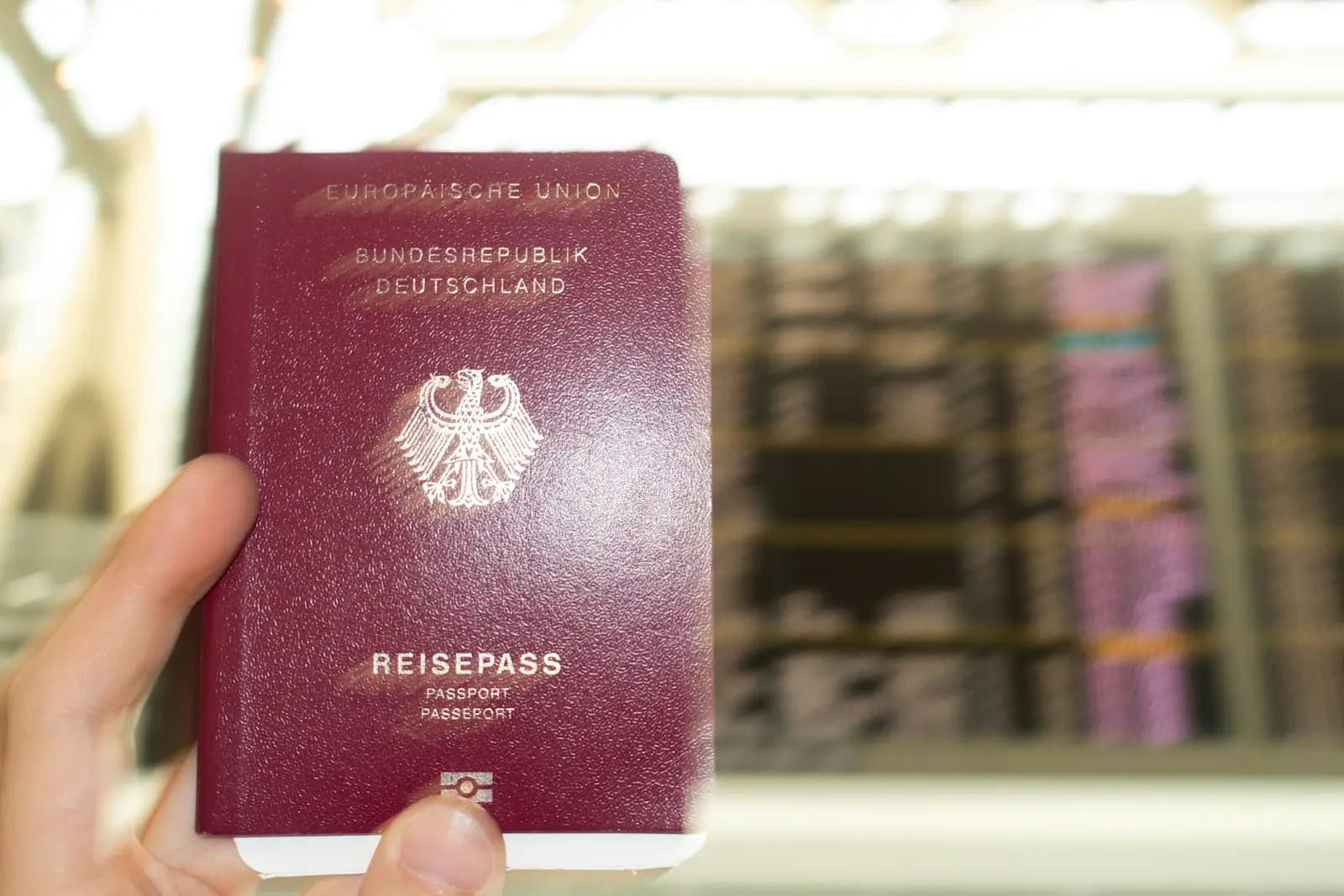
Parents ask the same question in different tones. Some ask, "I want to take my child to Japan for ten days. Does the other parent have to sign?" Others ask, "I want to send my child to study abroad." And some ask quietly, "If I just move there with my child, is that wrong?" The three sound alike, but the law treats them differently, because a trip with a return date and a change in where the child lives are not the same thing.
This guide covers one subject: taking a child out of the country. The wider rules on divorce and property are in the divorce, property and custody guide. Child support and legitimation are in the child support and parental power guide, and mixed-nationality couples are covered in the guide to divorcing a foreigner in Thailand. We do not repeat what those guides already explain.
The short answer
In short: the more a journey changes the child's life, the clearer and more written the consent needs to be. A short trip needs a consent letter and whatever documents the destination asks for. Study abroad needs school paperwork and an agreement on who looks after the child there. Relocation needs a clear agreement between the parents, or a court order. In every case, do not take the child without telling the other parent.
Legal basis (Civil and Commercial Code). Section 1566 sets the rule that a child who has not reached majority is under the parental power of the parents, and that parental power lies with one parent alone only in the cases the section lists, for example the other parent has died, has been declared incompetent or quasi-incompetent by a court, the court has ordered parental power to one parent, or the parents have agreed as far as the law allows them to. Section 1567 (1) gives the person exercising parental power the right to decide the child's residence, which is exactly where relocation collides with the law. For the child of parents who are not married, Section 1546 treats the child as the legitimate child of the mother alone, and Section 1547 makes the child the legitimate child of the father when the parents later marry, the father registers the child, or a court judges the child to be his.
Our practical view. The best document is the one written before a dispute. A consent letter that states the country, the dates out and back, and where the child will stay lets officers understand quickly, and later it proves the other parent knew. In relocation disputes, the parent who gets hurt is rarely the one who was refused. It is the one who decided first and asked for consent afterwards.
Hypothetical example. Nipa is a mother from Khon Kaen, married to David, a foreign national. They registered their marriage and live apart, but have not divorced and there is no court order. Their son Phum is 9 and lives with his mother in Khon Kaen. This year Nipa has three plans. The first is a ten-day trip to Japan in the school holiday. The second is a one-term summer school abroad. The third is a permanent move to David's country because she has been offered a job there. We use this family throughout.
1. How a short trip, study abroad and relocation differ
The three differ in intent and in how long the child will be abroad.
- A temporary trip has a date out and a date back. The child's usual residence stays in Thailand.
- Study abroad keeps the child abroad longer than a trip. It usually needs a student visa, school documents and a carer there, but it must still be clear where the child ordinarily lives and when the child returns.
- Relocation changes the child's usual residence to another country, so it falls squarely under Section 1567 (1).
The dividing line is not the name of the plan. It is what the other parent understood and agreed. "Studying for three months" that turns into three years, without the other parent agreeing, tends to become a dispute about wrongful retention (see section 6).
2. Who decides for the child
Answer this before preparing any document.
| Situation | Who holds parental power (as a general rule) |
|---|---|
| Parents are married and not divorced | Jointly (Section 1566) |
| Divorced, with an agreement or judgment | As set by that agreement or judgment |
| Parents not married, and the father has not made the child legitimate | The mother alone (Section 1546) |
| Father has registered the child or a court has judged the child to be his (Section 1547) | Check whether an agreement or court order on parental power exists; if not, have a lawyer assess the case |
| The other parent has died | The surviving parent (Section 1566, second paragraph) |
One warning. "Getting custody" as people say it in daily life and "parental power" in the law are not the same thing. If you hold an order or an agreement, read what it says about the child's residence, travel abroad and contact with the other parent. Some say clearly; some are silent. In our example Nipa and David are still married and there is no order, so parental power is joint.
3. A child's passport: whose consent is needed
The passport is the first hurdle parents meet. According to the information published by the Department of Consular Affairs, the Ministry of Foreign Affairs and Thai embassies, for a minor under 20 years old the general position is:
- Both parents appear in person and give consent.
- If one cannot attend, a consent letter on the Ministry of Foreign Affairs form is needed. The person consenting signs before an official at the district office, or through a Thai embassy or consulate if abroad, with a certified copy of an ID card or passport.
- If neither parent can attend, another adult may take the child, but extra documents are needed.
Each office or embassy can differ, and the documents they ask for change, so check the website of the Department of Consular Affairs or the embassy you will use before the appointment. If the father is not yet the legal father and your papers are incomplete, ask the officer what else is needed rather than guessing.
4. The travel consent letter: how to write it and when to notarise or translate
Thai law does not prescribe a form for a travel consent letter for every trip. In practice, airlines, border officers, embassies handling a visa, or the destination school may ask for the other parent's letter. Getting it early smooths the journey and is evidence that the other parent knew. The sample below is a starting point; adapt it to your facts.
Consent to take a child abroad

Date: [day/month/year]

I, [full name of the parent consenting], ID card / passport no. [number],
am the [father/mother] of [child's full name], born [day/month/year], passport no. [number].

I consent to [full name of the person travelling with the child], who is the [father/mother/relative],
taking my child to [country] from [date out] to [date back]
for the purpose of [holiday/school activity/visiting relatives].
The child will stay at [address or name of accommodation] and can be reached on [phone/email].

This letter consents only to travel during the period above.
It is not consent to change the child's usual residence or to stay abroad beyond this period.
The child will return to Thailand by [date back].

Signed ____________________ (consenting parent)
Signed ____________________ (witness)
When to have a lawyer or notary certify it. If the other parent lives in another city, or you expect the destination to ask for a certified document, certification of the signature makes the letter more credible. For use abroad, ask the destination embassy or school what they require first, because some want several levels of certification or a translation. If the letter is only in Thai and the destination does not use Thai, attach a translation. What kinds of documents need certification, and how to make them accepted at the other end, are in the guide to documents needing notarisation, and you can see our notarisation and translation service.
An important prohibition. Never forge the other parent's signature, never write a consent on their behalf without authority, and never add wording later such as "consents to relocation". A forged or altered document exposes you to civil and criminal liability and destroys your credibility in court.
5. Temporary travel vs study abroad vs relocation: a comparison
| Temporary trip | Study abroad | Relocation | |
|---|---|---|---|
| Nature | Clear date out and date back | Stay longer than a trip, following a course | Change of the child's usual residence |
| Consent to have | Consent letter from the other parent holding joint parental power | Consent specific to study, stating period and carer | A written agreement between the parents, or a court order |
| Documents usually involved | Passport, ticket, consent letter, accommodation | Passport, admission papers, student visa, consent letter, carer details | Agreement or court order, destination visa and residence papers |
| Certification or translation | When the other parent is far away or the destination asks | Usually both, as the school or embassy requires | Should always be certified and translated, since it is used in Thailand and abroad |
| Main risk | Questions at the border for lack of documents | Being accused of "studying" but not returning | Being sued for wrongful removal, possibly under the Hague Convention |
Before choosing a lane, check whether your documents are enough for that lane. A short-trip consent letter cannot serve as a relocation agreement. In our example, Nipa's first plan (Japan for ten days) can use a consent letter as in section 4. The second (summer school) needs details of the carer and the return date. The third (relocation) needs a conversation with David and an agreement or court order.
6. Relocation and the Hague Convention on child abduction
Relocation needs an agreement or a court order. Section 1567 (1) gives the right to decide the child's residence to the person holding parental power. If parental power is joint, one parent deciding alone to change the child's residence abroad risks being treated by the other as an improper exercise of that right. There are two proper routes.
- Agree in writing where the child will live and study, how the other parent will have contact or visits, and when the child will return to Thailand.
- Ask the Juvenile and Family Court to decide when you cannot agree. The court looks at the child's best interests on the facts. The result depends on the evidence and the court's discretion, and we cannot promise it in advance.
The 1980 Hague Convention on the Civil Aspects of International Child Abduction. Thailand is a party, and the Act on International Civil Cooperation concerning Violations of Child Custody Rights B.E. 2555 implements it, with the Office of the Attorney General as Thailand's central authority. The main ideas are:
- Wrongful removal means taking a child out of the country of habitual residence in breach of the other parent's custody rights under that country's law.
- Wrongful retention means the child went with consent for a limited time but was not returned on schedule, for example a "holiday" with no return.
- The Convention applies to children under 16, and its aim is to return the child so that the courts of the habitual residence decide custody, not to decide who is the better parent.
- There are exceptions, and the court of the destination country may in some cases decline to order return.
What not to misunderstand. The Convention does not make every country return a child automatically. First check whether the destination country is a party and has a treaty relationship with Thailand, and each application still goes through that country's own procedure. In our example, if Nipa moved Phum abroad without David's agreement and the destination were a party bound to Thailand, David could apply for the child's return. The risk therefore sits with the parent who took the child, not the parent left behind.
7. Destination rules, and when the other parent does not answer
Destination rules. We do not list entry rules for any country, because they differ and change. Check with the embassy or consulate of that country, and with the airline, about the visa the child needs, whether a consent letter must be carried, whether a translated birth certificate is needed, and, for study, what the school requires. If the child has two nationalities, check which passport must be used to enter and leave each country.
When the other parent does not answer. Do not treat silence as consent. Go step by step.
- Send a written request (a message you can keep as evidence, or an email) that states the country, the dates out and back, and the reason.
- Allow a reasonable time to reply, and follow up through the channels you have really used, such as a chat app, email or a family go-between.
- Keep a record each time you ask. Do not secretly get into the other parent's accounts or phone to find information, which may breach the Computer Crime Act B.E. 2550 and data protection law.
- If there is still silence, consult a lawyer about asking the Juvenile and Family Court to decide. Do not simply go.
What you must not do. Do not take the child without telling the other parent. Do not use the child as leverage, for example by refusing contact until a document is signed. Do not record or post about the other parent to humiliate them. None of this gets you consent, and it usually makes your case worse. If there is a safety concern for the child, tell the authorities and consult a lawyer immediately.
If the other parent is the one refusing you access to the child, see the guide for when a visitation is agreed but the other parent refuses.
8. Checklist
Before you decide
- Identify whether it is a temporary trip, study abroad or relocation
- Check who holds parental power from the documents you have (marriage record, divorce agreement, judgment or legitimation record)
- Read any agreement or court order for what it says on the child's residence and travel
Documents
- The child's passport is valid and meets Department of Consular Affairs conditions
- A consent letter stating country, date out, date back and who travels
- A copy of the consenting person's ID card or passport
- Certified signature and translation, as the destination embassy or school requires
- Destination documents, such as visa, school admission or accommodation, checked with the embassy
Contact with the other parent
- Send a written request with the travel plan
- Keep evidence of the request and the reply
- If there is no reply or a refusal, consult a lawyer about the Juvenile and Family Court
Before you actually leave
- Send the other parent the plan and a contact number
- Keep copies of every document on your phone and on paper
- For relocation, always have a written agreement or court order first, not after the journey
Further reading
- Divorce, property and custody — the general rules on how a court looks at parental power
- Child support and parental power — when the other parent takes the child, and legitimation
- Divorcing a foreigner in Thailand — when a spouse or the destination is abroad
- When visitation is agreed but the other parent refuses — the other side of the same problem
- Documents that need notarisation — when to certify and translate a consent letter
We help families draft consent letters, check documents before travel, and act before the Juvenile and Family Court. For an initial consultation, call +66 92 254 2045 or send us the details. See also our family law practice and notarisation and translation service.
This guide is published by Suwanvara Law Firm — a Khon Kaen law firm established in 1986. General information only, not legal advice on a specific matter.
